Best Cal AI Alternatives in 2026
Cal AI is one of the biggest success stories in calorie tracking: 15 million+ reported downloads, roughly 337,000 US App Store ratings at 4.8 stars, and annual revenue TechCrunch put at over $30 million (the founders themselves have claimed $50 million ARR), built by two founders who started the company as 17-year-old high school students and were still teenagers when it sold. But 2026 has been a turbulent year for the app, and if you're searching for a Cal AI alternative, you probably already sense why.
Below is the honest 2026 ranking, not the affiliate-link-driven version. One of the apps is ours, and we say so where it appears. (For the full story on Cal AI itself — pricing, accuracy, the acquisition — read our Cal AI review; for the broader category, see the best AI calorie counter apps.)
Apps like Cal AI: quick comparison
Prices are US pricing as of July 2026. Several of these apps use regional or dynamic pricing, so treat exact figures as approximate and check your own store listing.
| App | Photo AI | Photo AI on free tier? | Price (US) | Platforms | Standout feature |
|---|---|---|---|---|---|
| Cal AI (reference) | Yes, fast | No (reported) | Commonly reported $29.99/yr; dynamic | iOS, Android | Speed and popularity |
| Calsy | Yes, per-ingredient plate breakdown | Yes | Free tier; Premium optional | iOS, Android | Health Score + additive detection |
| SnapCalorie | Yes | 3 scans/day free | Varies; ~$80/yr reported | iOS, Android | Computer-vision pedigree |
| Yazio | Yes | No (PRO) | ~$47.90/yr PRO | iOS, Android | Recipes and meal plans |
| Lose It! | Yes (Snap It) | No (Premium) | ~$39.99/yr Premium | iOS, Android, web | Cheapest legacy annual plan |
| MyFitnessPal | Yes (Meal Scan) | No (Premium) | $19.99/mo or $79.99/yr | iOS, Android, web | Largest food database |
| Cronometer | Yes (Photo Log) | No (Gold) | $10.99/mo or ~$60/yr | iOS, Android, web | Micronutrient depth |
| MacroFactor | Yes | No free version | $11.99/mo or $71.99/yr | iOS, Android | Adaptive TDEE algorithm |
| Calorie Mama | Yes | Appears free (basic) | $9.99/mo or $29.99/yr | iOS, Android | Simple photo-first design |
Why are people looking for Cal AI alternatives in 2026?
Three developments, all within roughly six months.
1. Cal AI is now owned by MyFitnessPal
The deal closed in December 2025 and was announced on March 2, 2026 (terms undisclosed, per TechCrunch). Per that same reporting, Cal AI remains a separate app, its seven-person team was retained, and its food data has already been integrated with MyFitnessPal's nutrition database of 20 million foods, 68,500 brands, and 380+ restaurant chains. MyFitnessPal CEO Mike Fisher has said there are no current plans to merge the apps.
Still, the consolidation matters. Cal AI's entire pitch was being the fast, scrappy alternative to the legacy incumbents. It is now owned by the biggest legacy incumbent, and its once-busy blog has been quiet since April 2025. Product direction, pricing decisions, and your meal data all sit under the same corporate roof as MyFitnessPal. If you chose Cal AI specifically to avoid the big players, that reason no longer exists.
2. Cal AI was briefly pulled from the App Store in April 2026
In mid-April 2026, Apple removed Cal AI from the App Store. According to TechCrunch's reporting, Apple's objections were not just that the app bypassed the in-app purchase system with its own payment flow, but that its billing design was deceptive: a paywall that displayed a weekly price more prominently than the amount actually billed, a free-trial toggle that obscured the subscription's automatic renewal, and a second, different purchase screen shown to users who declined the first one.
The app was restored after Cal AI shipped fixes — the removal lasted about a week — and it sits at #7 in Health & Fitness as of this writing. The episode didn't kill Cal AI, but it followed years of widely reported user complaints about the app's billing.
3. Opaque pricing and a paywalled camera
Cal AI doesn't advertise a single subscription price up front. Third-party pricing guides most commonly cite $9.99/month or $29.99/year with a 3-day trial that requires a card and auto-renews, but they also describe the paywall as dynamic and heavily tested, with reported monthly variants ranging from $5.99 to $20 and weekly plans from around $2.99. And the headline feature, photo scanning, is reportedly not free at all: according to those same guides, the free tier covers barcode scanning and manual search only.
One more thing worth weighing: in March 2026, security outlets including Cybernews and SC Media reported an alleged Cal AI data breach said to involve roughly 3.2 million user records exposed through an unsecured backend. The company has not confirmed the incident, and the coverage consistently labels it alleged. For an app holding daily health data, it's still a fair question to ask before subscribing (more in the FAQ below).
None of this means Cal AI stopped working. It means mid-2026 is a reasonable moment to look at what else exists.
1. Calsy
Full disclosure: Calsy is our app. We build it, so read this entry with that in mind. The cons below are real.
Best for: Cal AI-style photo logging without a paywall on the camera.
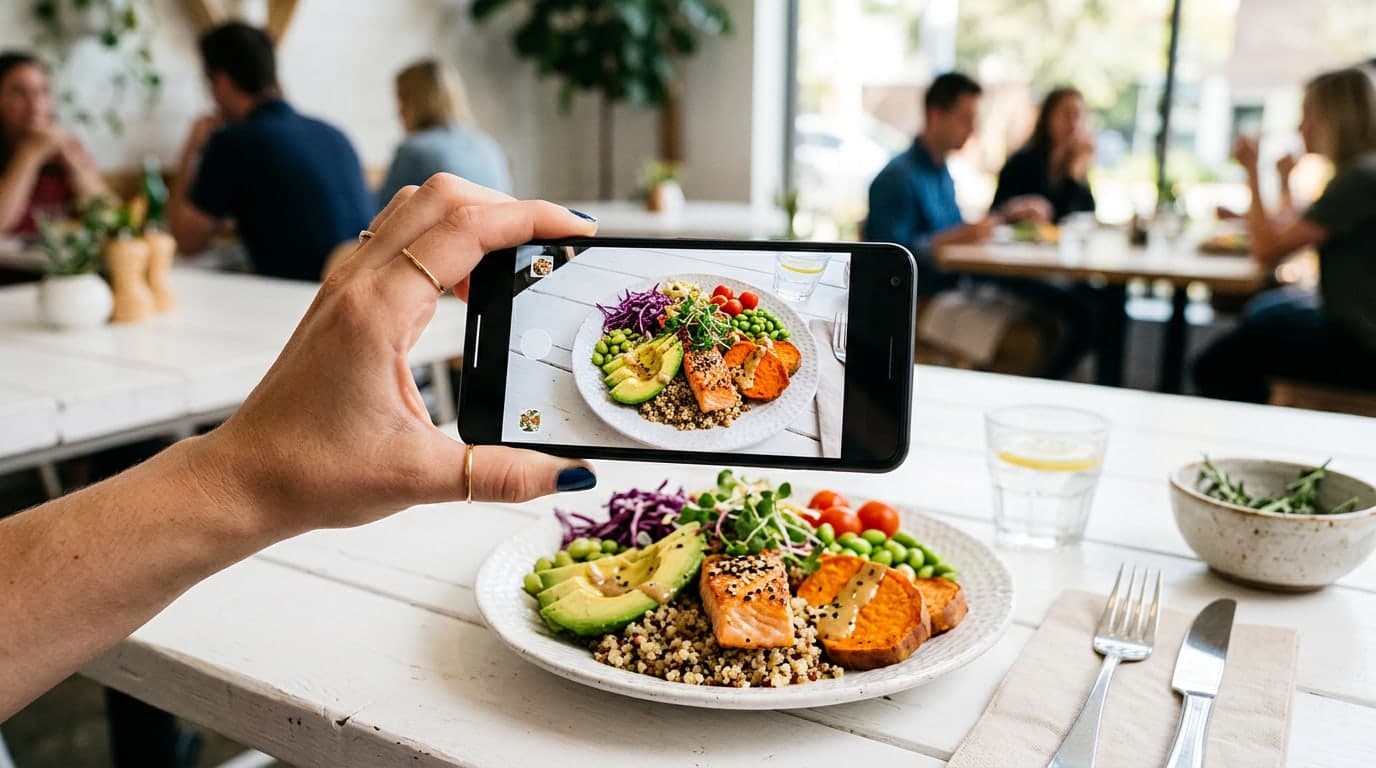
Calsy is built around the same core promise as Cal AI: point the camera at your plate and get calories and macros back in about 3 seconds. The difference is what it costs and what you learn per meal. Photo AI is included on the free tier, with no card and no trial countdown. Multi-item plates are broken down per ingredient rather than guessed as one blob. Every food gets a Health Score from 0 to 100 mapped to A-E grades, backed by detection of 100+ food additives and NOVA ultra-processed classification. The barcode scanner covers 300,000+ products, the AI works in 35+ languages, and text logging handles meals you can't photograph.
You don't even need to install it to judge the recognition quality: the free food calorie scanner lets you try Calsy's AI on a food photo right in your browser.
Weaknesses: Calsy is young. The iOS review base is still small (4.9 stars, but far fewer ratings than any legacy app here; the Android listing shows a 100K+ install badge). There's no web app for day-to-day logging, and community and meal-plan features are thin compared to Lose It! or MyFitnessPal.
Verdict: if Cal AI's photo paywall or billing history is the reason you're leaving, this is the most direct replacement: same speed, free camera, plus food-quality scoring Cal AI doesn't attempt.
2. SnapCalorie
Best for: a genuinely free daily photo allowance with serious computer-vision credentials.
SnapCalorie comes from Perception Labs, a YC-backed team whose founders previously worked on computer vision at Google, including Google Lens and Cloud Vision. The free tier is unusually honest: 3 AI photo logs per day, stated plainly in the official FAQ, with manual entry and barcode scans uncapped. Premium unlocks unlimited AI logging and an AI-nutritionist chat.
Weaknesses: premium pricing is opaque — it varies by region and promotion, with reported annual figures ranging from under $20 on promo to roughly $80. The user base is small, and the app is utilitarian rather than polished.
Verdict: the strongest photo-AI pedigree among the small apps. If three scans a day covers your eating pattern, it's effectively free.
3. Yazio
Best for: recipes and meal plans at a low annual price.
Yazio built its name in Europe and now markets itself heavily around AI calorie tracking. The catch: AI photo logging is part of PRO, not the free tier. PRO typically runs about $47.90/year (roughly $3.99/month billed annually) with a 7-day trial, and Yazio discounts the annual plan often and aggressively, which makes it one of the cheaper paid tiers here.
Weaknesses: the photo AI you came for is paywalled, food-quality signal is limited, and users commonly report the US food database trails the European one.
Verdict: good value if recipes, fasting tracking, and meal plans matter more to you than free photo logging.
4. Lose It!
Best for: budget-friendly legacy tracking for US users.
Lose It! is the elder statesman of photo logging, with a 4.8-star average across hundreds of thousands of US ratings. Its Snap It photo feature sits in the Premium plan, so free users are back to search-and-type. Premium runs about $39.99/year, the cheapest annual plan among the legacy apps, though Lose It! uses dynamic pricing, so your offer may differ.
Weaknesses: photo AI is paywalled and its recognition lags the 2026 multimodal generation, the database is US-centric, and there's no food-quality scoring.
Verdict: a sensible pick for a US user who wants a mature, cheap tracker and doesn't mind paying for the camera.
5. MyFitnessPal
Best for: database depth, web logging, and ecosystem integrations. Also: it owns Cal AI now.
MyFitnessPal is the category giant, with millions of US ratings and the largest food database anywhere — 20 million foods, 68,500 brands, and 380+ restaurant chains, per the figures shared around the Cal AI acquisition. Its Meal Scan photo AI is a Premium feature at $19.99/month or $79.99/year; Premium+ at $24.99/month or $99.99/year adds meal-planning tools like the Meal Plan Builder and automatic grocery lists.
Weaknesses: it's the most expensive photo AI on this list, and the free tier is manual logging with ads. MyFitnessPal also has a track record of moving once-free features behind Premium — most famously the barcode scanner in 2022. And if you're leaving Cal AI because of the acquisition, switching to MyFitnessPal isn't leaving; it's moving to the parent company.
Verdict: unmatched database, dated workflow, premium-heavy pricing. The full Calsy vs MyFitnessPal comparison covers where each one wins.
6. Cronometer
Best for: people who care about micronutrients, not just calories.
Cronometer remains the accuracy nerd's tracker: the free tier tracks 80+ nutrients against verified, curated food data rather than crowd-sourced entries, with ads and limits on historical data. Worth flagging, since older articles get it wrong: Cronometer now does have AI photo logging. Photo Log, launched in September 2025, identifies the ingredients in a meal photo and matches them to Cronometer's verified database — but it's exclusive to the Gold tier at $10.99/month or about $60/year billed annually.
Weaknesses: photo AI is newer, Gold-only, and not the app's center of gravity. The workflow rewards people who enjoy data entry.
Verdict: the right tool for verified nutrition data and deficiency tracking. Not the fastest logger, and the camera costs money.
7. MacroFactor
Best for: experienced dieters and lifters who want the calorie math handled adaptively.
MacroFactor has a smaller but famously loyal user base and a stated policy that there is no free version and never will be: $11.99/month, about $48 per six months, or $71.99/year after a 7-day trial. In exchange, everything is included — AI photo logging too — so nothing is double-paywalled. Its signature is the adaptive algorithm that recalculates your energy expenditure from your actual logged weight and intake, instead of trusting a one-time estimate. If you just want that maintenance number without a subscription, our free TDEE calculator does the static version of the math.
Weaknesses: no free tier at all, no web app, and it's built for people who already track consistently.
Verdict: the best pure coaching engine here. Overkill for casual photo loggers.
8. Calorie Mama
Best for: the simplest possible photo-first experience.
Calorie Mama (by Azumio) was doing food photo recognition years before it was cool. Its US App Store listing prices subscriptions at $9.99/month or $29.99/year, its review base is small, and photo recognition appears usable on the free tier, with premium unlocking deeper nutrient tracking.
Weaknesses: the recognition model predates the current multimodal generation, and there's little beyond the photo feature: no food-quality scoring, no adaptive targets.
Verdict: fine as a free experiment, hard to recommend as a daily driver in 2026.
Which Cal AI alternative should you pick?
Choose by your dominant constraint:
- You want free photo AI plus food-quality signal: Calsy.
- You want a free daily scan allowance from a computer-vision team: SnapCalorie.
- You want the cheapest polished annual plan: Yazio or Lose It!.
- You want maximum database depth and don't mind who owns what: MyFitnessPal.
- You track micronutrients: Cronometer.
- You want adaptive calorie targets and will happily pay: MacroFactor.
- You just want to point and shoot, nothing else: Calorie Mama.
For a broader look at the whole category beyond Cal AI-style apps, see our best calorie tracker apps of 2026 ranking.
FAQ
Is Cal AI owned by MyFitnessPal?
Yes. MyFitnessPal acquired Cal AI in a deal that closed in December 2025 and was announced on March 2, 2026, per TechCrunch. Cal AI continues as a separate app with its original team, and its food data has been integrated with MyFitnessPal's database. MyFitnessPal's CEO has said there are no current plans to merge the two apps.
Why was Cal AI removed from the App Store?
Apple pulled Cal AI in mid-April 2026. According to TechCrunch's reporting, the issues included bypassing Apple's in-app purchase system with its own payment flow and deceptive billing design: a paywall that emphasized a weekly price over the amount actually billed, an obscured free-trial auto-renewal, and a second purchase screen shown to users who declined the first. The app was restored after about a week, once Cal AI shipped fixes.
Is Cal AI's photo scanning free?
Reportedly not. According to third-party pricing guides, photo scanning requires a subscription after the 3-day trial, and the free tier is limited to barcode scanning and manual search. Commonly cited pricing is $9.99/month or $29.99/year, but Cal AI's paywall is dynamic and heavily tested, so the price you see may differ.
What is the best free alternative to Cal AI?
For unlimited free photo logging, Calsy (our app) includes photo AI on the free tier. SnapCalorie offers 3 free AI photo logs per day. Cronometer's free tier is deep on nutrition data but keeps photo logging in its paid Gold tier.
How accurate are photo calorie AI apps?
Modern multimodal models identify foods well; portion size remains the main error source across every app on this list. We've written a detailed breakdown of how AI calorie tracking works, including where the estimates come from and where they break down.
Did Cal AI have a data breach?
An alleged breach was reported by security outlets (including Cybernews and SC Media) in March 2026, claiming roughly 3.2 million user records were exposed via an unsecured backend. The company has not confirmed the claim, and the coverage describes it as alleged, so treat it as unverified.
Ready to track smarter?
Snap a photo, get your calories, macros, and Health Score instantly. See what other trackers miss.
Download Calsy — It's Free