Why the Source of Your Protein Matters (Not Just the Amount)
The 30-Gram Myth
You have probably heard the advice: eat 30 grams of protein per meal. Hit your daily target. Build muscle. Lose fat. Simple.
But here is the part most people skip over: 30 grams of protein from grilled salmon and 30 grams of protein from a processed hot dog are not the same thing. Your body absorbs them differently, uses them differently, and responds to them differently.
Protein quality is one of the most overlooked factors in nutrition. Once you understand why it matters, you will never look at a nutrition label the same way again.
Complete vs. Incomplete Proteins
Protein is made up of 20 amino acids. Your body can produce 11 of them on its own. The remaining 9 are called essential amino acids (EAAs) — you must get them from food.
A complete protein contains all 9 essential amino acids in adequate amounts. An incomplete protein is low in one or more of them.
Complete Protein Sources
- Eggs
- Fish and seafood
- Poultry
- Beef and pork
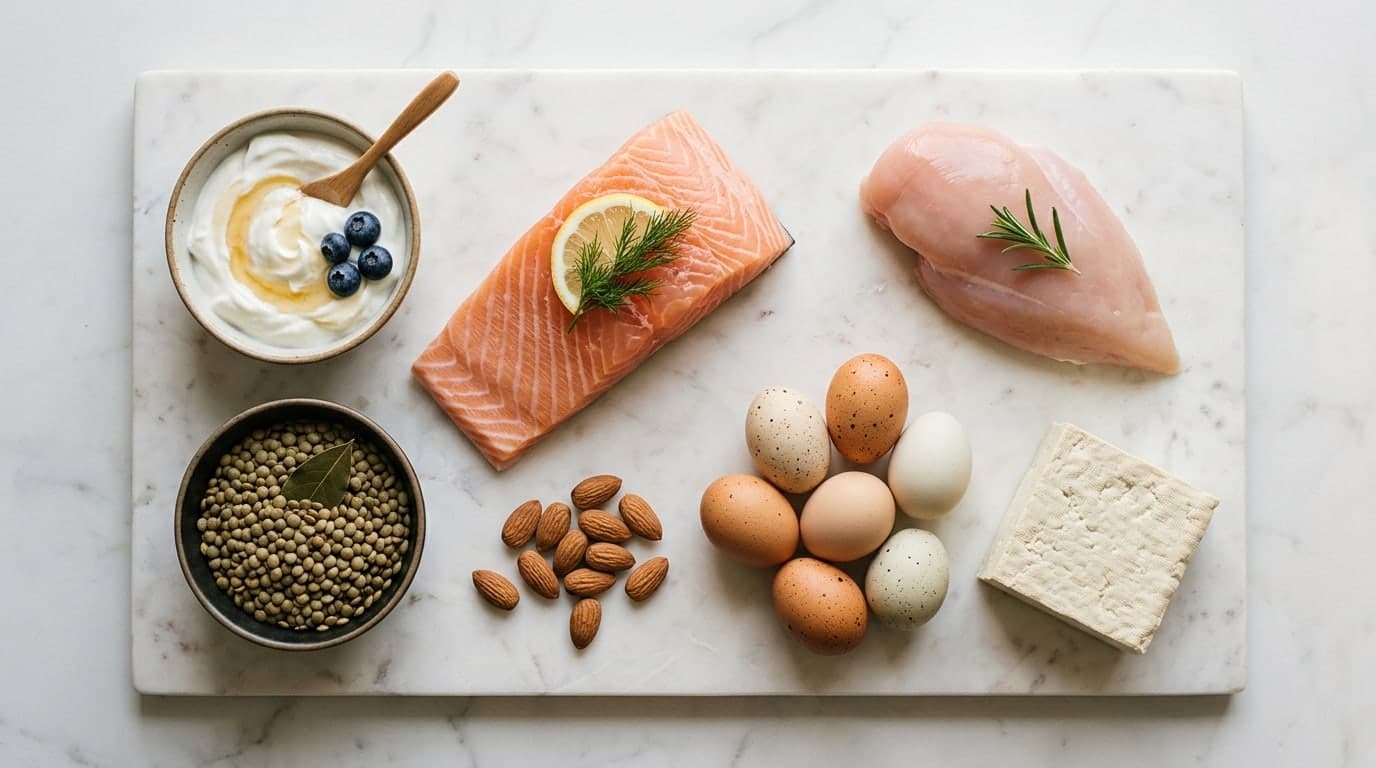
- Dairy (milk, cheese, yogurt, whey)
- Soy (tofu, tempeh, edamame)
- Quinoa
- Buckwheat
Incomplete Protein Sources (Low in One or More EAAs)
- Rice (low in lysine)
- Wheat and most grains (low in lysine)
- Beans and lentils (low in methionine)
- Nuts and seeds (low in lysine)
- Corn (low in lysine and tryptophan)
- Peas (low in methionine)
This does not mean incomplete proteins are useless. It means you need to combine them strategically. The classic rice and beans combination works because beans provide the lysine that rice lacks, and rice provides the methionine that beans lack. You do not even need to eat them in the same meal — combining them across the same day works fine.
Bioavailability: How Much Your Body Actually Uses
Eating protein and absorbing protein are two different things. Bioavailability measures how efficiently your body can digest, absorb, and utilize the protein you eat.
Scientists use several scales to measure this, but the most comprehensive is the Digestible Indispensable Amino Acid Score (DIAAS), which accounts for both amino acid profile and digestibility.
Here is how common protein sources compare:
| Protein Source | DIAAS Score | Bioavailability |
|---|---|---|
| Whey protein isolate | 1.09 | Excellent |
| Whole eggs | 1.13 | Excellent |
| Chicken breast | 1.08 | Excellent |
| Milk | 1.14 | Excellent |
| Salmon | 1.05 | Excellent |
| Beef | 0.99 | Very good |
| Soy protein isolate | 0.90 | Good |
| Chickpeas | 0.83 | Moderate |
| Pea protein | 0.82 | Moderate |
| Cooked rice | 0.60 | Low |
| Wheat bread | 0.44 | Low |
| Almonds | 0.40 | Low |
A DIAAS score above 1.0 means the protein provides more than enough of every essential amino acid. Below 0.75 is considered low quality.
What this means practically: if you eat 30 grams of protein from wheat bread, your body might only use 13-15 grams of it effectively for muscle protein synthesis. The same 30 grams from eggs gives your body the full package.
Why a Hot Dog Is Not the Same as Salmon
On paper, a hot dog and a piece of salmon might show similar protein numbers. But the real-world difference is enormous.
Processing Degrades Protein Quality
When meat is heavily processed — ground, mixed with fillers, treated with preservatives, and cooked at high temperatures — several things happen:
- Amino acids are damaged. High-heat processing can destroy or modify amino acids, particularly lysine and methionine, reducing their availability.
- Advanced glycation end products (AGEs) form. These compounds are created when proteins react with sugars during high-heat processing. AGEs promote inflammation, oxidative stress, and are linked to accelerated aging and chronic disease.
- Protein is diluted with fillers. Hot dogs, chicken nuggets, and processed deli meats contain starches, soy fillers, water, and other non-protein ingredients that reduce the actual protein density.
- Nitrites and other additives are introduced. These preservatives come with their own health concerns that have nothing to do with protein quality.
A typical hot dog contains about 5-7 grams of protein per link, much of which comes from mechanically separated meat — a slurry of bone, cartilage, and connective tissue that has a far lower amino acid quality than intact muscle meat.
Fat Profile Matters Too
Protein sources come packaged with other nutrients, and those matter:
- Salmon delivers protein alongside omega-3 fatty acids (EPA and DHA), vitamin D, selenium, and B12
- Eggs provide protein with choline, vitamin A, and healthy fats
- Greek yogurt adds protein plus probiotics, calcium, and potassium
- A hot dog delivers protein alongside sodium nitrite, saturated fat, sodium, and various fillers
- A protein bar often delivers protein alongside sugar alcohols, emulsifiers, and artificial sweeteners
The company your protein keeps makes a significant difference to your overall health.
The Leucine Threshold: The Muscle-Building Trigger
Among the essential amino acids, leucine plays a special role. It is the primary trigger for muscle protein synthesis (MPS) — the process by which your body builds and repairs muscle tissue.
Research suggests you need about 2.5-3 grams of leucine per meal to maximally stimulate MPS. This is sometimes called the "leucine threshold."
How much food does it take to hit that threshold?
- Whey protein: 25-30g provides ~3g leucine
- Chicken breast: 120g (4 oz) provides ~2.8g leucine
- Eggs: 4 whole eggs provide ~2.7g leucine
- Greek yogurt: 300g provides ~2.5g leucine
- Tofu: 250g provides ~2.0g leucine (below threshold)
- Lentils: 300g cooked provides ~1.8g leucine (below threshold)
- Bread: you would need over 500g to approach the threshold
This does not mean plant proteins cannot build muscle. It means you may need larger portions or strategic combinations to hit the leucine threshold. Adding a handful of pumpkin seeds to a lentil soup, or combining tofu with quinoa, can close the gap.
Plant Protein: Underrated but Requires Strategy
Plant-based protein sources are sometimes dismissed as inferior. That oversimplifies the picture. Plant proteins offer unique benefits that animal proteins do not:
- Higher fiber content — promoting gut health and satiety
- Phytonutrients and antioxidants — compounds linked to reduced disease risk
- Lower environmental footprint — relevant for sustainability-minded eaters
- Anti-inflammatory properties — many plant proteins come with compounds that reduce systemic inflammation
The key to maximizing plant protein is variety and volume:
- Combine complementary sources — legumes with grains, nuts with seeds
- Eat slightly more total protein — if your bioavailability is lower, increasing intake by 10-20% compensates
- Include soy regularly — it is the highest-quality plant protein, with a DIAAS score comparable to many animal sources
- Consider fermented options — tempeh and natto have improved digestibility compared to unfermented soy
- Do not rely on a single source — diversity ensures you cover all essential amino acids
How Processing Affects Different Protein Sources
Not all processing is bad. Some processing improves protein quality:
- Whey protein isolate is highly processed but has excellent bioavailability because processing removes lactose and fat while concentrating the amino acids
- Tempeh undergoes fermentation that actually increases protein digestibility compared to raw soybeans
- Cooking eggs increases protein digestibility from about 50% (raw) to over 90% (cooked)
But many forms of processing degrade quality:
- Extrusion (used in cereal, protein bars, and puffed snacks) can damage amino acids through high heat and pressure
- Hydrolysis used in some supplements can break proteins into fragments that are less effective for MPS
- Smoking and curing introduce harmful compounds while denaturing proteins
- Deep frying creates oxidized proteins and advanced glycation end products
The general rule: minimal, gentle processing preserves protein quality. Aggressive industrial processing degrades it.
Practical Guidelines for Optimizing Protein Quality
You do not need to analyze amino acid profiles at every meal. These simple habits cover most of the bases:
- Prioritize whole protein sources — foods where the protein comes naturally, not from isolates or concentrates added during manufacturing
- Vary your sources — rotating between fish, poultry, eggs, dairy, legumes, and soy ensures broad amino acid coverage
- Front-load protein at breakfast — most people eat very little protein in the morning, missing an opportunity to trigger MPS early
- Aim for 25-40 grams per meal from quality sources to consistently hit the leucine threshold
- Be skeptical of protein claims on processed foods — "10g of protein" from a cookie is not equivalent to 10g from a chicken breast
- Cook gently when possible — steaming, poaching, and baking preserve protein quality better than deep frying or charring
Smart trackers like Calsy score protein quality differently based on the source, so you can see at a glance whether your 30 grams of protein are the kind your body can actually put to work.
The Bottom Line
Hitting your protein target matters. But where that protein comes from determines how effectively your body can use it for muscle building, recovery, satiety, and overall health.
A diet built on diverse, minimally processed protein sources will outperform a diet that hits the same number from bars, shakes, and processed meats — even if the grams on paper look identical.
The next time you plan a meal, do not just ask "how much protein does this have?" Ask "how good is this protein?" Your body will thank you for the difference.
Ready to track smarter?
Snap a photo, get your calories, macros, and Health Score instantly. See what other trackers miss.
Download Calsy — It's Free